Warfighter sounds like a joke. It's the sort of ludicrously macho title you'd expect to find on a mischievous Grand Theft Auto parody of first-person military shooters, or perhaps a cheesy Rainier Wolfcastle movie in The Simpsons. What's really disappointing is that either of those options would be more entertaining than what's ended up on this disc.
That Medal of Honor: Warfighter is utterly generic and devoid of personality doesn't come as much of a surprise. Clearly dusted off to fill the years when DICE can't provide EA with a new Battlefield game, Medal of Honor's rebirth as a khaki placeholder is now complete. This is not a game that seeks to challenge or innovate. It's here to give you exactly what you expect and nothing more. Yet even when following in the footsteps of others, it can't help tripping over its own boots.

The story finds you hopping from one Tier One operative to another across a fragmented time frame as you close in on The Cleric, a shadowy terrorist leader who should in no way be taken as a stand-in for Bin Laden. You pop up in Pakistan, Yemen, Dubai and Sarajevo to take down evil Muslims, Somalian pirates and swarthy Eastern Europeans. Stark captions tell you that events happened SIX WEEKS AGO or EIGHTEEN HOURS LATER - but none of it adds up to anything compelling, or even coherent.
It's another race to get to another super-villain before he unleashes another atrocity that evokes 9/11. We've done this so many times that the details barely even register, and even in a genre where opaque plotting has become the norm, Warfighter barely manages to connect the dots.
1
Preacher is one of the returning characters from the previous game. He's not a real preacher.

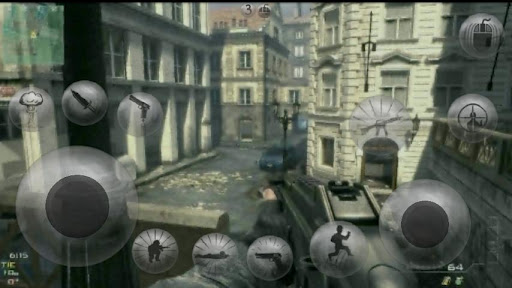
The gameplay that makes up these disconnected sorties is painfully thin. This is the corridor shooter at its most basic and unadorned, offering rigidly scripted dioramas through which you jog and battle, and no reason to use anything other than your trigger finger. On the rare occasions that Warfighter asks you to interact with an object, such as a generator or fuse box, it simply asks that you shoot it. Such relentless focus on gunplay might be invigorating if it were part of a more robustly constructed ride, yet Warfighter is a slipshod nag of a game, blighted by glitches and bugs even after you've downloaded a hefty 200MB day one patch.

Button prompts are reluctant to respond. Audio cues are mistimed and subtitles contain mistakes. Objects hover and lodge in the scenery. Characters skitter and lurch across the map as they try to follow their rudimentary pathfinding, sometimes floating and gliding back into cover, sometimes flying up into the air rather than walk through a building. Enemies fire bullets that pass through brick walls, or squat in plain sight doing nothing, while you can line up headshots that fail to leave a mark. Grenades are a particular problem, often appearing without warning in illogical places. Sometimes characters just fall down dead for no apparent reason.

There's a persistent air of "what's going on?" that can't be excused by the chaos of war. Too often, the game more closely resembles a low-budget wannabe than a potential blockbuster from a major publisher. I encountered all of these quirks and more during the six hours it took me to trudge through the campaign on normal difficulty, but no single problem was more damaging than the terrible AI.
"On the rare occasions that Warfighter asks you to interact with an object, such as a generator or fuse box, it simply asks that you shoot it."
2

Wouldn't it be nice to play a shooter where a major city doesn't have to suffer a terrorist attack just to remind us that bad guys are bad?
Call of Duty at least knows how to use smoke and mirrors to hide the puppetry behind its elaborately constructed theme-park experiences. Warfighter attempts the same trick but lacks the presentational skills to sell the misdirection. Nowhere is this more apparent than in the behaviour of your squad, the members of which can often be found crouched yards behind the action, going through their idle animation while you fight alone, or shooting at a piece of scenery. They'll stand inches away from an enemy trading shots that do nothing. On occasion, they'll even vanish completely.

These moments don't even come during interesting combat scenarios. The bulk of the game is simply a duck-shoot, with sporadic interludes for reliable genre standbys such as sniper sections, turret missions and a couple of car chases. The closest the game comes to innovating in mission design comes as you try to escape Dubai with a high-value target stuffed in the boot of your car. Navigating the roads while avoiding the security cars searching for you is a clever idea - Pac-Man as a vehicular Tom Clancy stealth game - but it doesn't last long and you're quickly back to smashing and crashing your way down linear routes.

All the technical snafus make a mockery of the game's humourless reverence for the real-life fighting men it seeks to honour. Based on what you see in this game, Tier One soldiers are not elite warriors but barely competent morons who will throw a grenade into a corner for no reason and then run to stand next to it. Viewed against this laughable backdrop, the game's queasy paean to American superiority in the face of irrational foreign savagery is horribly misplaced. If it were any more competent, the tub-thumping jingoism might be offensive rather than simply tragic.

"We don't learn what it's like to be these men; we're simply scolded, passive-aggressively, for not being them."
3
The final level may not technically be a recreation of the assault on Bin Laden's hideout, but it might as well be.
Crucially, the story has the emotional range of a Steven Seagal movie. None of the characters has a personality or even a real name. How are we supposed to understand what these men go through if we're not even trusted with their identity? Stump. Preacher. Mako. These pithy nicknames provide impenetrable narrative body armour that prevents the player from knowing these men. Our shared viewpoint is only what's visible beyond their iron sights.

When the story does attempt to show us the cost of what these men do, it's via corny, soft-focus domestic cut-scenes that wouldn't pass muster in the cheesiest soap opera. Estranged wives, wide-eyed daughters - it's not about exploring the emotional burden of men trained to do terrible things, it's about revering their ability to shoulder that burden without doubt or complaint. We don't learn what it's like to be them; we're simply scolded, passive-aggressively, for not being them. If you want meaningful commentary on what modern warfare does to the soul, stick with Spec Ops: The Line.

Having set expectations low with such a threadbare single-player campaign, Warfighter's multiplayer raises the bar a little. While it lacks the aggressive to-and-fro of COD or the epic sweep of Battlefield, there are good ideas to be found here. Gunplay is tight and all the usual game modes are accommodated, with the obligatory Team Deathmatch augmented by variations of Capture the Flag, King of the Hill and Battlefield's Rush mode. Home Run, the flag capture mode, is one of the more interesting, with a "no respawn" rule and flags that can't be returned. Matches are fast and taut and reward solid teamwork.
"Even at its best, Warfighter's multiplayer is only ever pretty good, hampered as it is by the same rough edges that blight the campaign."
4

The multiplayer wears the same Battlelog system and game engine as Battlefield 3, like a little brother in hand-me-down clothes.
Teamwork is the basis of the enjoyable Buddy system as well, with teams sorted into fire team duos. As long as your buddy isn't engaged in combat or under threat, you can respawn on them almost immediately rather than waiting to be returned to base. It's a neat little mechanism that encourages close co-operation rather than lone wolves.

Yet even at its best, Warfighter's multiplayer is only ever pretty good, hampered as it is by the same rough edges that blight the campaign. Map clipping is common, damage levels feel inconsistent, killstreaks are unbalanced and the generally ragged feel blights some otherwise promising maps. Customisation options are plentiful, but cluttered menus and an overly busy interface mean that finding your feet and stamping your identity on the game are more arduous than they need to be.

Such hurdles aren't unusual for a shooter at launch, of course, but even if another patch could level Warfighter's playing field, it would still only be a passable and temporary alternative to the genre leaders rather than a replacement. This is a genre where exceptional levels of polish are required just to keep pace, and any new entry must not only meet high expectations, but attempt to exceed them. Warfighter borrows ideas from COD and Battlefield and offers a few of its own, but it falls far short of the standards set elsewhere. This is a field where "pretty good" is no longer good enough.

A game with no identity of its own, unable to step out from the shadow of its genre rivals: the gaping chasm between Warfighter's Nietzschean obsession with supermen warriors and the creaking game design that contains them proves impossible to bridge.

There's been a backlash brewing for some time against the bombastic direction military shooters have taken, but it would be wrong to assume that Medal of Honor: Warfighter is simply the game unlucky enough to bear its brunt. The truth is far simpler and more depressing: it's just not that good.
Source : eurogamer


Gameplay coming soon.... stay updated